Prescribed peptides. One clinician behind each.
Peptide timing
Reviewed by a licensed clinician. Shipped by a licensed pharmacy.
A licensed clinician reviews your intake. Review is not approval — a clinician may decline.
Provider review; most peptide requests need no video visit. Approval is never guaranteed.
Short chains of amino acids that carry instructions.
- 01
Growth-hormone secretagogues
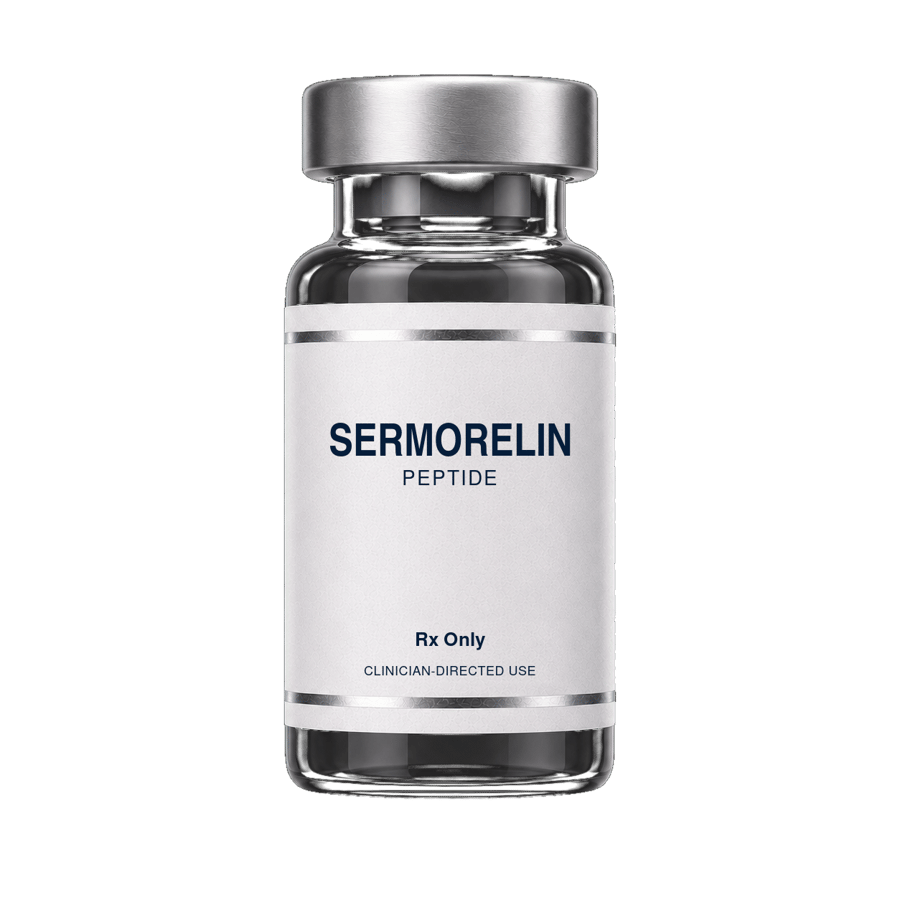
Sermorelin and related peptides prompt your own pituitary release rather than replacing it — supporting recovery, body composition, and sleep depth within a physiologic rhythm.
- 02
Metabolic (GLP-1 class)
Semaglutide and tirzepatide are GLP-1–class medications. A clinician decides whether either is appropriate after reviewing your labs.
- 03
Repair and tissue support
Peptides used adjunctively for connective-tissue recovery and training load. Prescribed only where clinical history and goals justify them.
- 04
Cellular and longevity support
NAD+ and related protocols target cellular energy pathways. Dosing is conservative, monitored, and reassessed against markers rather than sensation.
These statements have not been evaluated by the Food and Drug Administration. Peptide therapy is prescribed at a licensed clinician's discretion and is not intended to diagnose, treat, cure, or prevent any disease. Individual results vary.
Comprehensive biomarkers. Read in context.
A live preview of the REVRCEL panel, mapped to the protocols and products each marker informs. Tap any marker to see what it drives.
Peptide therapy, answered.
Do I need a prescription for peptide therapy?
Yes. Every REVRCEL peptide is prescribed by a licensed clinician after a consultation and, where indicated, bloodwork. Nothing ships without a prescription on file.
Do I need bloodwork before starting peptides?
For most protocols, yes. A baseline panel establishes where you are and makes the follow-up meaningful. Some short-course protocols may begin after consultation alone at the clinician's discretion.
Where are REVRCEL peptides compounded?
Compounded by licensed pharmacies. Compounded medications are not FDA-approved.
How are peptides administered?
Most are small-volume subcutaneous injections given at home with a fine-gauge needle. Your clinician walks you through technique, storage, and schedule at the start of the protocol.
How long before results are measurable?
Timelines differ by protocol. Metabolic protocols are typically reviewed at four to twelve weeks; recovery and sleep protocols are reassessed at the quarterly check-in against markers and reported outcomes.
Can peptides be combined with hormone therapy?
That is a clinician's decision, made after reviewing your labs. Like any medication, peptides can cause side effects. Your clinician reviews the risks with you.